An old-growth forest is a biological treasure that has formed over the course of a millennia-long ecological succession.
September 19, 2020

FFungi Staff
FFungi Volunteer
Ecologist for Fungi Foundation
An old-growth forest, also known as a primary forest, is a biological treasure that has formed over the course of a millennia-long ecological succession. It is never a static state, but rather one of constant and chaotic homeostasis, with biodiversity, heterogeneity and structure aligned towards resilience. In addition, it has a living, interconnected soil where mycorrhizal connections prevail, and it is a carbon reservoir of the biosphere. An old-growth forest is an ecosystem in which every leafy nook is the niche of a specific habitat for hundreds of organisms.
To assess and manage forests, legal definitions are used, such as that of the Food and Agriculture Organization of the United Nations (FAO), or CONAF in Chile. In general, these definitions are based on the level of canopy cover within a given area.
In Chile, for 15 years the Law on the Recovery of Native Forest and Forestry Promotion, Law No. 20,283, was processed in Congress and was finally enacted in 2008. Without doubt, a great leap that felt like a victory, but the law quickly became limited and outdated in the face of today’s urgency. The term “primary forest” is not mentioned. No distinction is made between an ancestral forest thousands of years old and newly sprouted second-growth stands. Our law is ecologically outdated; it does not represent the forest ecosystem, still less the old-growth forest and its interconnected complexity.
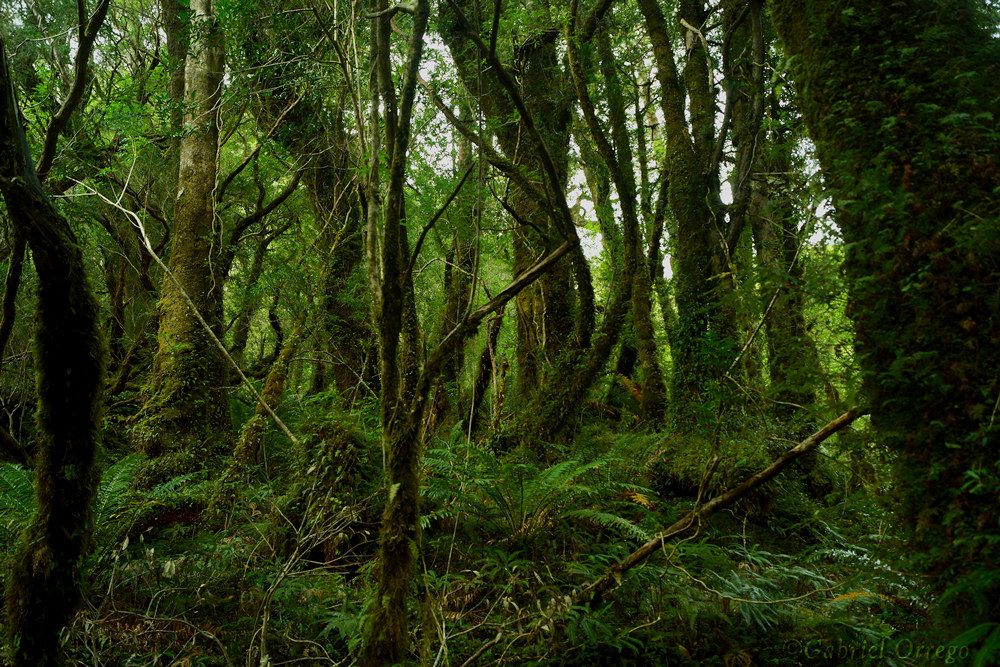
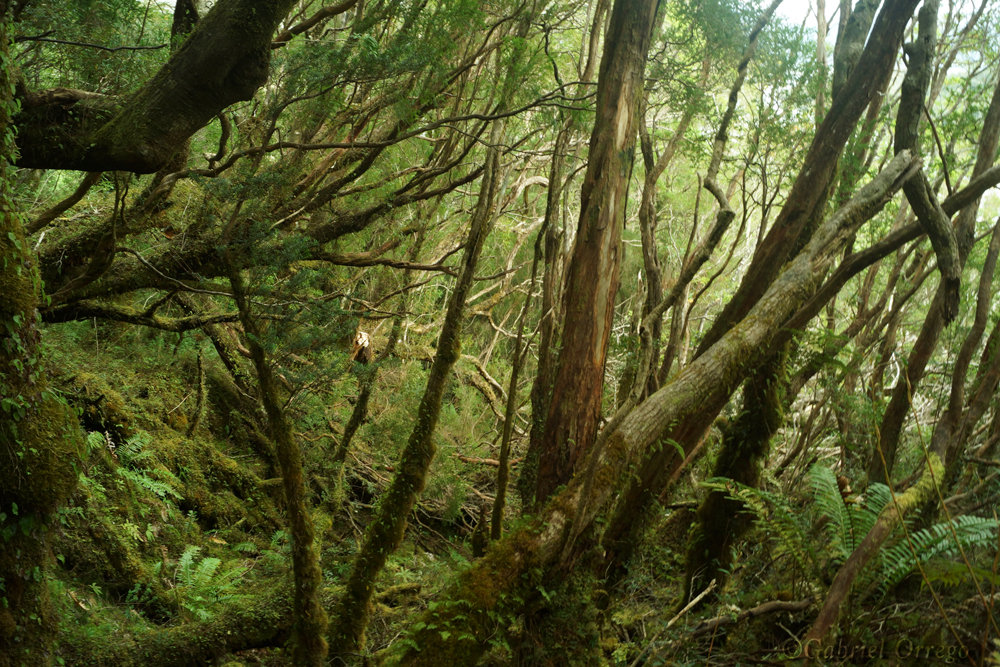
Mother trees are interconnecting nodes in the soil that can transfer nutrients and information to other, younger trees through the mycelium of mycorrhizal fungi, a symbiotic union between fungi and plant roots. The mycorrhizal network is ubiquitous in the forest and connects all plants to one another (Beiler, 2010).
Through the mycelium, mature trees that rise above the foliage transfer a kind of surplus of photosynthates (carbohydrates) to regeneration and to the understorey in the shady strata, where there is less chance of light (Orrego et al.., 2018). In this way, a seedling has three times greater survival and growth when it receives nutrients by being connected to the forest’s mycorrhizal network (Teste et al., 2009).
Our cold, rainy forests maintain a condition in which more carbon is fixed than is released, accumulating organic matter in the soil (Lehmann & Kleber, 2015). The forests ofNothofagus…are particularly large carbon sinks, thanks to the fact that they form extensive ectomycorrhizal networks. Fungi such as those of the genus…CortinariusThey explore long distances of soil in search of nitrogen and phosphorus for their hosts in exchange for immense volumes of photosynthates. This organic carbon is stored in distinctive, longer-lasting underground tissues, which contribute significantly to stabilised carbon reservoirs.
Old-growth forests are a protective buffer against extreme weather events, as they prevent natural disasters such as floods and mudslides. The loss of this heritage can lead to serious negative local and regional effects, such as, for example, a water deficit. A primary forest sustains hydrological cycles, storing more water and regulating flow rates (Watson et al.., 2018).
Primary ecosystems are the heritage of the biosphere and of the future. They are ancestral relicts that cannot be restored within our timescale; their care is of local, regional and global importance. Conserving our old-growth forests is a global priority and a matter of security.The old-growth forest is not an over-mature forest!It is a portrait of harmony and complexity in an ecosystem. They are the last ones left; let us take care of them.


.avif)