Fungi Foundation's Recommendations for SBSTTA 27 (CBD)
Read more


Our work in India strives to explore the country’s rich ethnomycological heritage, unveiling and honoring the ancient connections between humans and fungi while celebrating the wisdom passed down through generations. Our aim is to foster a deeper appreciation for fungal conservation and its vital role in sustaining both people and the planet. Through this work, we seek to educate, inspire, and advocate for the protection of these profound and often overlooked relationships.

.png)
.png)
.png)
.png)
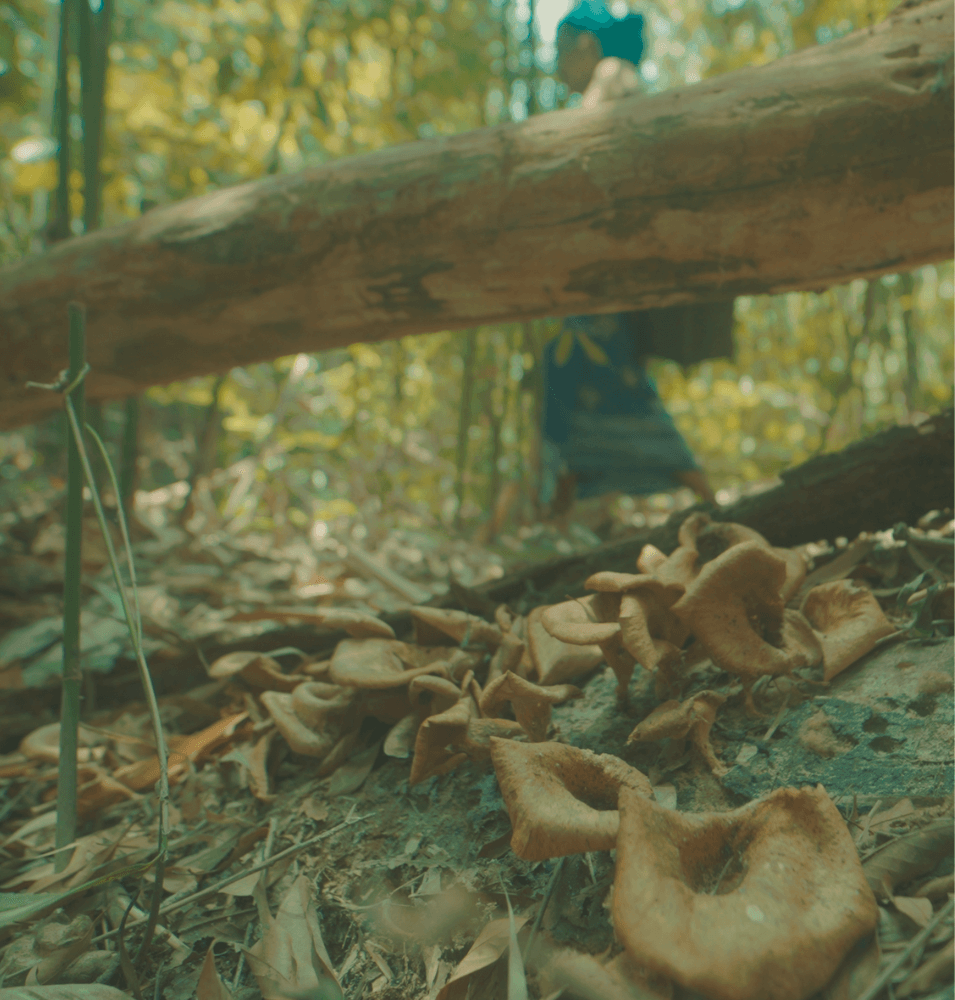
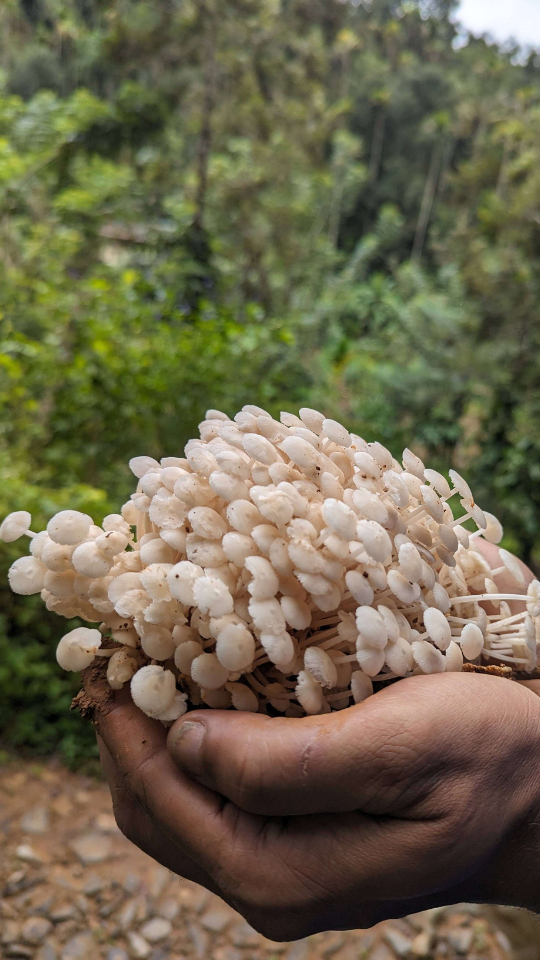
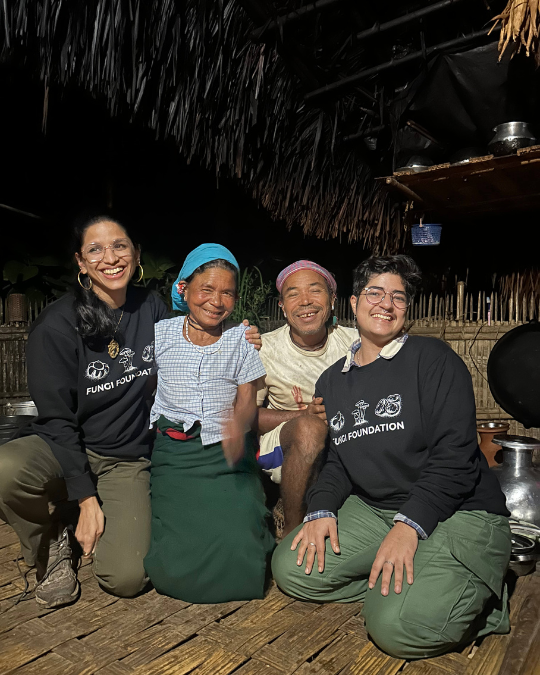
Fungi Foundation India works closely with Khasi and Garo communities in Meghalaya – one of India’s most biodiverse regions – to document, support, and strengthen the transmission of traditional fungal foraging knowledge. For generations, Elders in these communities have cultivated deep ecological relationships with local forests, identifying, gathering, preparing, and stewarding a wide diversity of wild mushrooms. These practices are rooted in careful observation, seasonal attunement, and cultural protocols that guide sustainable harvesting.
Today, younger generations have fewer opportunities to learn these skills as changing livelihoods, migration, and modern schooling pull them away from time spent in the forest. Climate change has also begun to shift fungal fruiting patterns, shorten monsoon windows, and disrupt long-held indicators used to track seasonal abundance – making intergenerational knowledge even more critical.
Through partnerships with NGOs such as Grassroot Shillong and direct collaboration with Elders in villages like Sadolpara, the Elders Program supports community-led efforts to safeguard these traditions.. Our ongoing work aims to ensure that ethnomycological knowledge – central to cultural identity, food sovereignty, and ecological resilience – continues to thrive in the Khasi and Garo Hills.
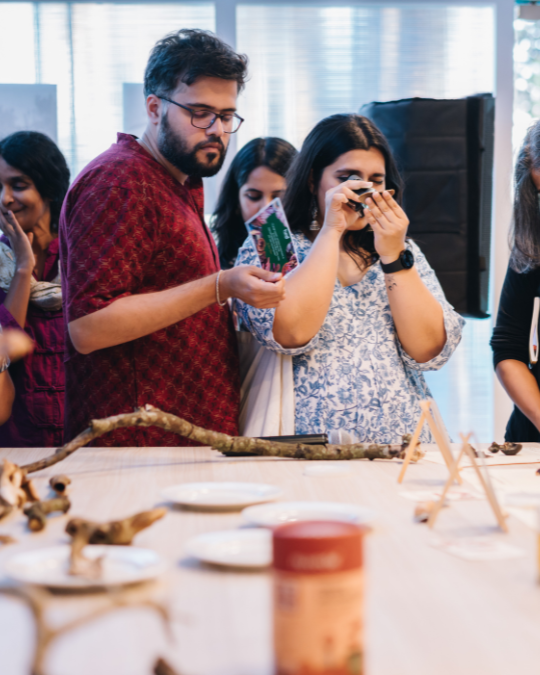
Fungi Foundation India partners with artists, filmmakers, cultural institutions, and community organisations to deepen public understanding of fungi and their relationships with people, forests, and traditional knowledge systems. Through film screenings, sensory workshops, collaborative art-making, and interdisciplinary dialogues, these programs foster ecological literacy and invite communities into more-than-human ways of seeing and relating.
Do you want to know more about the activities and film screenings around The Mushroom Keepers? Click here.
Fungi Foundation India is committed to establishing fungi as an essential component of conservation thinking and practice across the country. Our conservation work focuses on strengthening scientific and institutional understanding of fungal diversity, and advocating for their formal inclusion within existing environmental frameworks. Our goal is to ensure that fungi are recognised within India’s conservation agendas, alongside flora and fauna.
Through early-stage advocacy, public engagement, and partnership-building, we are laying the foundation for future policy integration—ensuring that fungi can be meaningfully protected under environmental laws, management plans, and institutional guidelines. Our long-term aim is a national conservation landscape in which fungi are understood not as background organisms, but as integral, irreplaceable components of India’s ecosystems.
Fungi Foundation India is expanding its efforts to document, protect, and revitalize India’s diverse fungal traditions and ecologies through a series of new research, community, and conservation initiatives.
We were recently awarded the Enduring Traditions Grant by the Serendipity Arts Foundation to document our work on the enduring relationships between Termitomyces mushrooms, termites, and the communities of the Konkan coast. Across Maharashtra, Goa, and Karnataka, these relationships are embedded in ritual, seasonality, and forest-based cosmologies. Many communities believe that Goddess Sateri resides within the roen – the termite mound – reflecting a pre-Hindu belief system that recognises termite mounds as living, sentient structures central to monsoon rhythms and local ecological knowledge. This project aims to foreground these ancestral traditions and understand how they continue to guide sustainable harvesting practices today.
We are also working to support fungal diversity surveys in under-studied and unsurveyed wildlife sanctuaries across India. These efforts seek to build foundational scientific knowledge that can inform conservation planning and highlight the ecological significance of fungi within forest systems.
We are also developing knowledge-exchange programs with Forest Departments, creating spaces where traditional foragers, researchers, and conservationists can learn from one another. By bridging scientific and community expertise, these initiatives aim to strengthen both fungal conservation and cultural continuity.
Across all of this work, Fungi Foundation India continues to advance broader efforts toward multi-species justice – recognising fungi, forests, and human communities as co-dependent participants in shared ecological futures, and building frameworks that support their collective wellbeing.
A documentary film that explores the profound ethnomycological connections between fungi and the Khasi and Garo communities of Meghalaya, India. The film delves into the rich cultural and spiritual significance of fungi, showcasing how these organisms shape the lives and beliefs of the people who have lived in harmony with them for generations.
At its core, The Mushroom Keepers is about the intertwined stories of people and fungi – one cannot exist without the other. These narratives, passed down through millennia, offer a rare glimpse into indigenous knowledge, now threatened by the loss of both fungal biodiversity and ancient forests. The film highlights the urgency of documenting and preserving these stories, not only for the people of Meghalaya but for the world, as it reflects a universal bond between culture and nature.
At Fungi Foundation, we believe that as Indians, we have a profound responsibility to safeguard our ethnomycological heritage. By conserving the fungi of our land and the knowledge surrounding them, we can honor the ancient wisdom that has long been a part of our ecological and cultural identity. This work is as much about conserving fungal ecosystems as it is about preserving the stories of those who live in harmony with them.