Three new countries have joined the international commitment to recognise and conserve fungi, bringing the total number of signatories to 17. The initiative also unveiled its new official logo during a reception hosted by the Armenian Presidency of the CBD COP 17, the United Kingdom, Chile and the Fungi Foundation.

FFungi Staff
FFungi Volunteer
Italy,Uruguay and Panama have joined the Fungal Conservation Pledge during the United Nations Biodiversity Conference (COP17) in Yerevan, Armenia, expanding international support for the recognition and conservation of fungi in Multilateral Environmental Agreements and to take concrete actions to include them in biodiversity, climate and agricultural policies at the national level.
Launched at COP16 in 2024 by the governmentsof Chile and the United Kingdom, in collaboration with the Fungi Foundation,the Pledge calls on governments to recognise fungi as an independent kingdom of life in national and international legislation, policies and agreements, and to adopt concrete measures to advance their conservation.

With the addition of these three countries, 17nations have now signed the Pledge, reflecting growing international support for including fungi in biodiversity conservation efforts alongside animals and plants.
“Fungi sustain some of the most essential processes that make life on Earth possible, from nutrient cycling and soilformation to the relationships that connect entire ecosystems. Their conservation is fundamental to protecting biodiversity and maintaining healthy,resilient environments. The addition of Italy, Uruguay and Panama to the Fungal Conservation Pledge strengthens a shared international commitment to recognising their ecological importance and advancing their protection worldwide.,” said Giuliana Furci, Executive Director of the Fungi Foundation.
A new logo for the Fungal Conservation Pledge
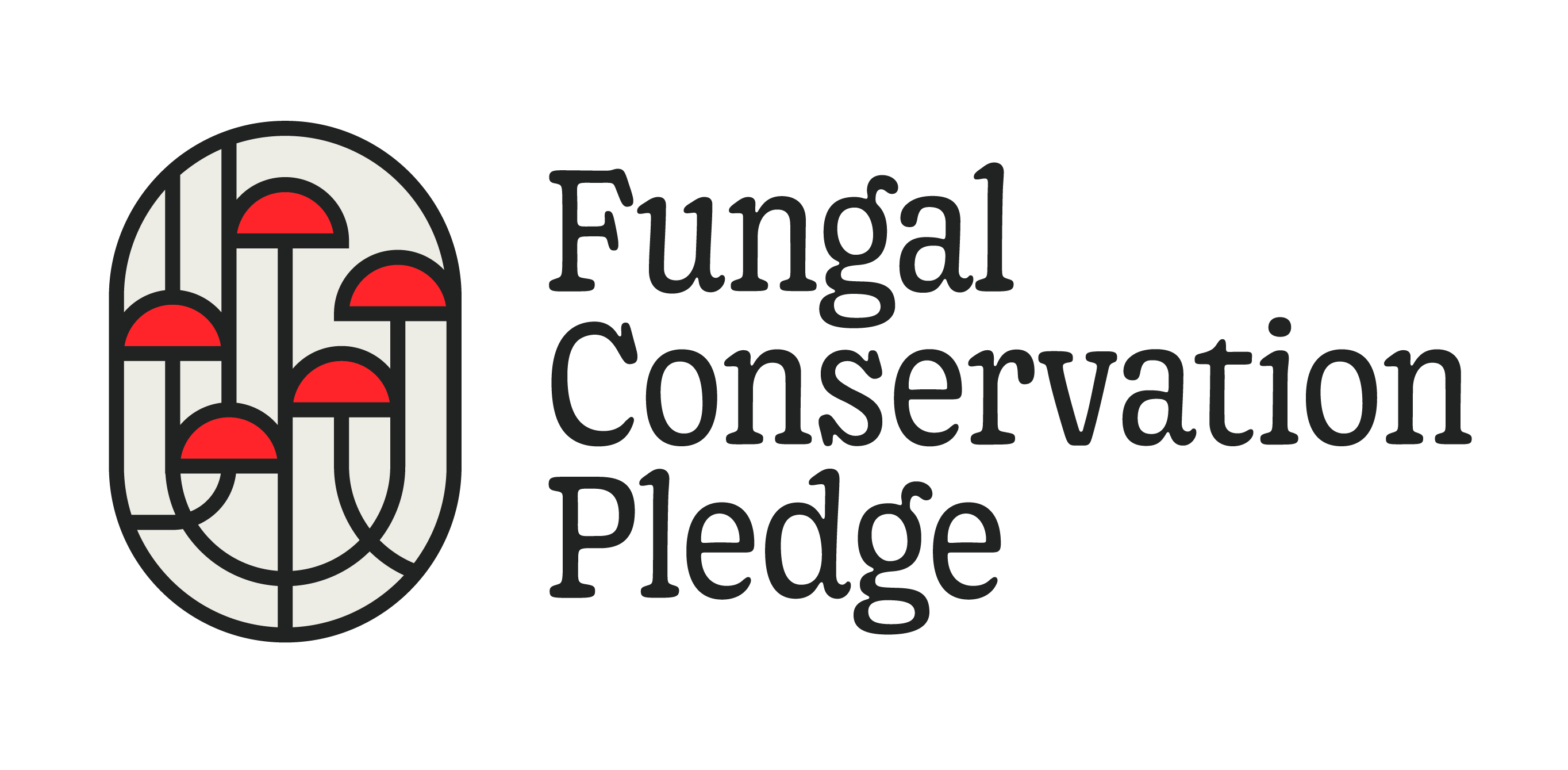
The new official logo of the Fungal Conservation Pledge was also unveiled on October 27th during the Pledge for Fungal Conservation Reception, held at the Armenian Pavilion in the COP17 Blue Zone.
The reception was hosted by the Armenian Presidency of the CBD COP 17, the United Kingdom, Chile and the Fungi Foundation, during the High-Level Segment of COP17. Representatives of countries that had already signed the Pledge, as well as new signatories,expressed their support for the initiative and its objectives.
The logo draws inspiration from mycelium, the interconnected networks formed by fungi, and mushrooms, their most recognisable structures. Its interwoven lines represent both the ecological connectionssupported by fungi and the collaborative nature of the Pledge, which brings countries together around a shared commitment to fungal conservation.
The new visual identity accompanies thecontinued expansion of the initiative and its efforts to strengthen international cooperation on fungal biodiversity.
Advancing fungal conservation beyond COP17
The expansion of the Fungal Conservation Pledge comes as countries negotiate the implementation of the Kunming–MontrealGlobal Biodiversity Framework, the international agreement aimed at halting andreversing biodiversity loss by 2030.
Ahead of COP17, the efforts of Pledgesignatories contributed to the inclusion of fungi in recommendations from twomeetings of the Convention on Biological Diversity's Subsidiary Body on Scientific, Technical and Technological Advice (SBSTTA), covering four policy areas.
These developments provide an opportunity for governments to further integrate fungal biodiversity into national conservation strategies, biodiversity monitoring, ecosystem restoration and international environmental agreements.
To learn more about the Fungal ConservationPledge, explore the initiative and read the commitment, visit www.fungalpledge.org.
The videos featured during the COP17 side event, also visible in the photographs accompanying this press release, were provided courtesy of Planet Fungi.