Irma Gamundí was an outstanding Argentine mycologist, botanist, curator, illustrator, science communicator and professor. Her legacy reaches all those who love, study and protect the Kingdom Fungi. In this blog, we tell you about her life and career.
November 3, 2023
%20(1).avif)
FFungi Staff
FFungi Volunteer
Irma Gamundí divided her time and interests between different fields: she was a mycologist, botanist, curator, science communicator, illustrator, and a secondary - and university-level teacher.
She was born on 13 January 1927 in a small village to the north-east of Buenos Aires, Argentina, and on finishing primary school, she already had an idea of what she would devote the rest of her life to: “the school gave me a book: the biography of Mme Curie (...) which made a vivid impression on me, awakening in me a great admiration for the researcher. I believe it was the seed of my vocation,” Irma wrote. in her autobiography.
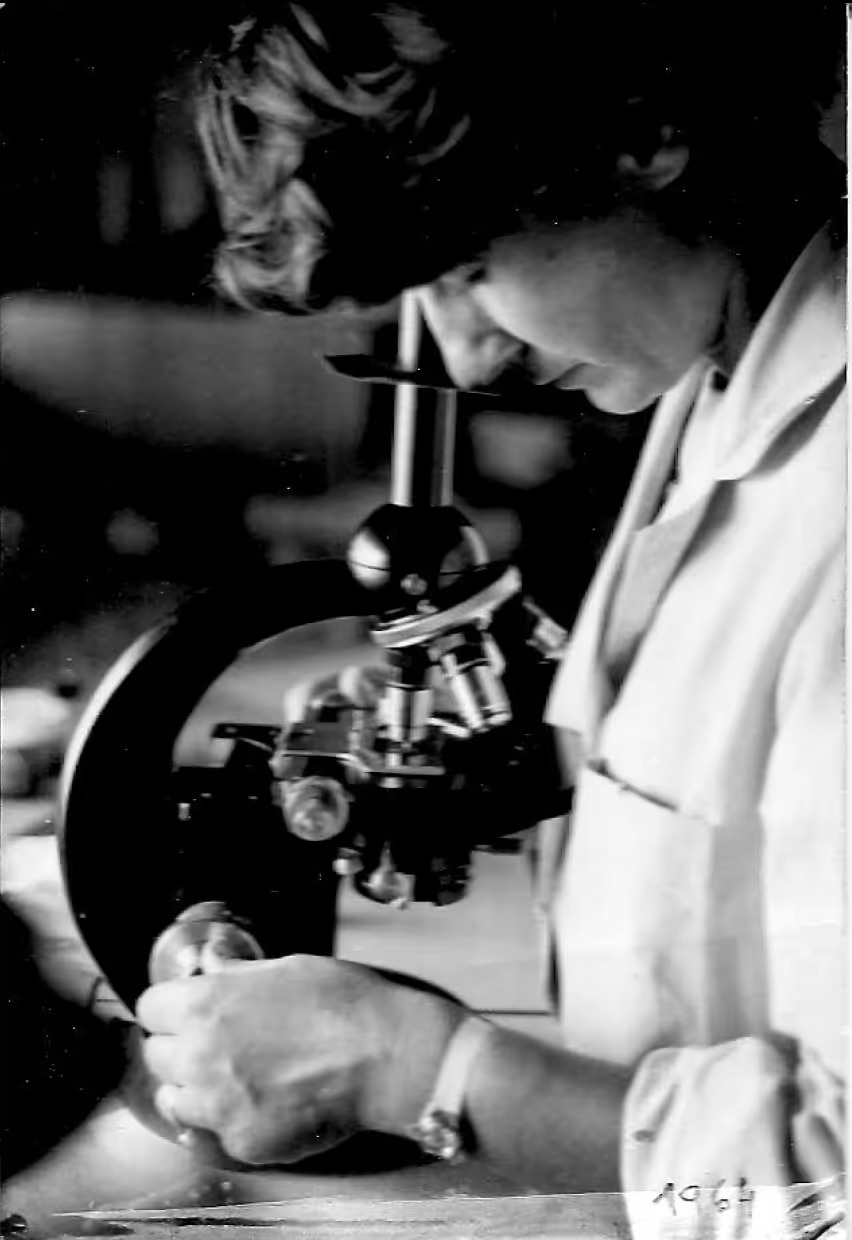
She was initially a secondary school teacher and taught in state schools, then went on to continue her studies, earning a degree in Natural Sciences (with a specialism in botany) and completing a Doctorate on taxonomy in Discomycetesat the University of Buenos Aires. Her passion and enthusiasm for the study of fungi led her to specialise in Columbia University(USA), in Kew Royal Botanic Gardens and at the International Mycological Institute (both in the United Kingdom), publishing in collaboration with various international specialists in mycology.
She attained the rank of Senior Researcher at CONICET (Argentina’s National Scientific and Technical Research Council) and served on its Advisory Committee. She was Director of the Instituto de Botánica Carlos Spegazzini from 1975 to 1991, and in 1994 she founded the Asociación Micológica Carlos Spegazzini, an important milestone for Argentine mycology. She took part in CONICET’s Programa Flora Criptogámica de Tierra del Fuego (PROFCRIP), and in 2003 received the “Premio Konex” for merit in Plant Biology. Among her lines of work, the following stand out:Cyttariales South American, Discomycetes and Ascomycetes Of Nothofagus from Patagonia and Tierra del Fuego.
.avif)
Gamundí stood out for her dedication to teaching, from her early days as a secondary-school teacher to supervising doctoral theses. As part of her university teaching, in 1988 she launched the postgraduate mycology course for the PhD in Natural Sciences. Education was always important in her professional work; she firmly believed that teaching does not take place only in classrooms, but also in the laboratory and on field trips. That is why she championed the dissemination of science through various activities, among which the outreach workshop “Autumn meeting of mushroom hunters” stands out. A wonderful woman who did not waste time.
One of their major contributions for students and people with an interest in fungi is the book.“Mushrooms of the Patagonian Andean Forests”, which she published in 1993 together with Egon Horak. The book is a visual guide to identifying fungi for the general public. It contains photographs and illustrations created by her herself, who also had an artistic side.
Can you imagine being a female mycologist in the 1980s? Gamundí was one of the most important mycologists in Latin America; she paved the way for a scientific career in a field that has historically been dominated by men. As a field mycologist, she carried out mycological expeditions from the northern Yungas to the Andean-Patagonian regions of Tierra del Fuego. According to Gamundí, studies of herbarium macromycetes must invariably be complemented by observation in their natural habitat. This is why she also led collaborative projects with different entities responsible for biological collections, forging paths for the taxonomic study—both in the laboratory and in the field—of certain groups of fungi.
.avif)

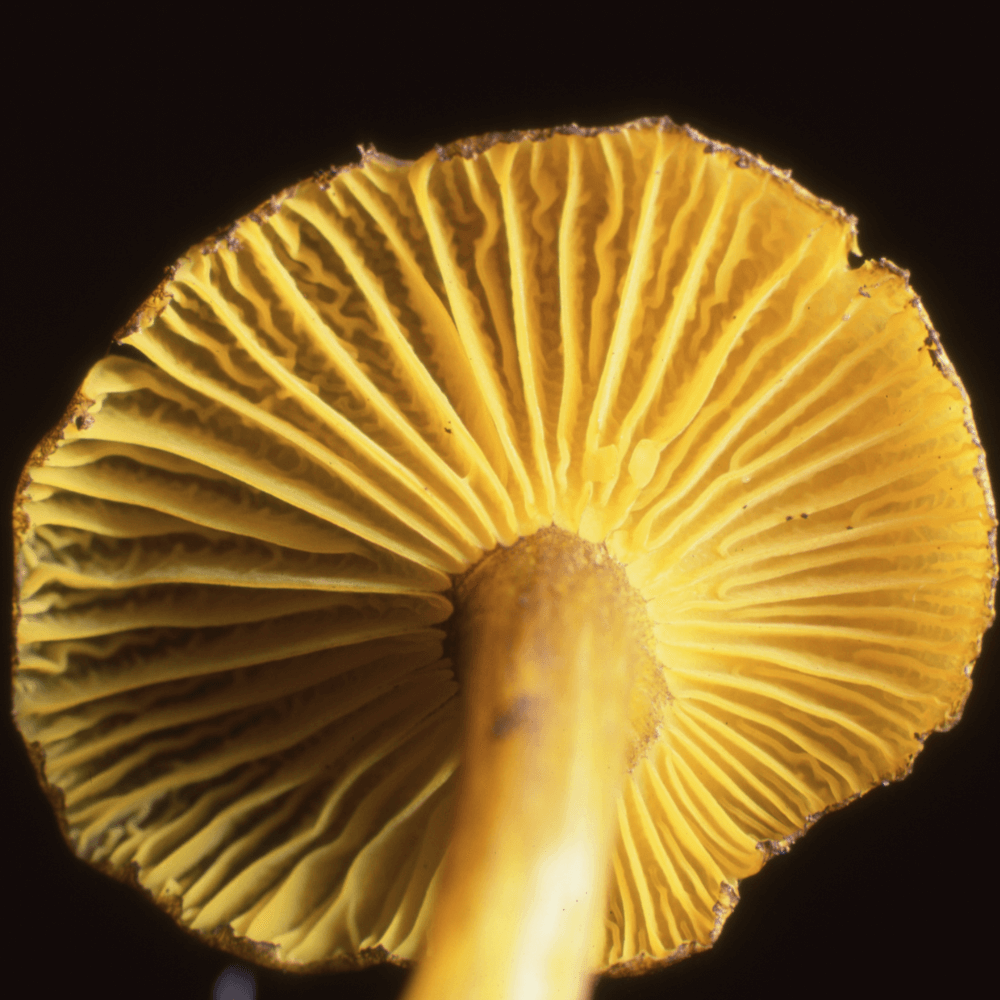
Among the species that have been named in their honour, we find:Geomorium gamundiae…a mushroom that is very difficult to find because its habitat is the forests of…NothofagusIn southern Argentina, they are being affected by fires, logging, drought and climate change, which means it is classified as “critically endangered” on the fungi Red List. In addition, the species was dedicated to it.*Galerina gamundiae*, a fungus more common than the previous one, which is found along the edges of the many trails that cross the Patagonian forests, growing among bryophytes.
.avif)
Por su trayectoria y aportes a la micología, al cumplir 80 años Irma Gamundí fue homenajeada por sus colegas y estudiantes junto a la Sociedad Argentina de Botánica, dedicándole un número especial del Boletín de la Sociedad de Argentina de Botánica en 2007.
Sources:


.avif)